Commercial Waste Spitalfields: Recycling and Sustainability
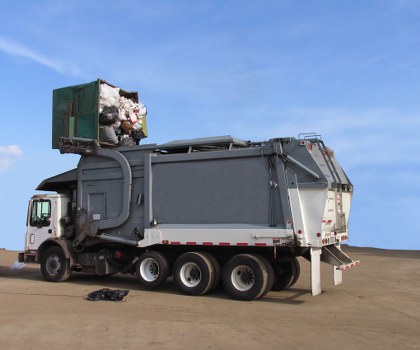 Commercial Waste Spitalfields operates with a clear, neighbourhood-focused sustainability mission. In the heart of Tower Hamlets, our approach to managing the Spitalfields commercial waste stream emphasises an eco-friendly waste disposal area that reduces landfill diversion and supports a circular economy. We work with businesses, markets and property managers to make the sustainable rubbish area more than a concept: it is a practical, measured programme that improves local environmental outcomes and creates social value.
Our first priority is clarity and measurability. We have set a formal recycling percentage target of 70% recycled, reused or repurposed of all collected commercial waste by 2028. This target is ambitious but realistic: it drives continual improvement across mixed recycling, organic diversion and specialist waste streams such as textiles and food packaging. The 70% figure is underpinned by route-level monitoring, partnerships with local transfer stations and regular audits of separated materials.
 To enable that shift, we coordinate with several local transfer stations and materials recovery facilities (MRFs) that serve Spitalfields and neighbouring boroughs. These include borough-operated transfer sites in nearby districts and regional facilities in Hackney and Newham that provide capacity for bulking, sorting and onward recycling. Through smart scheduling and consolidation we maximise loads to each transfer station, cutting vehicle mileage and improving material quality at the processing end.
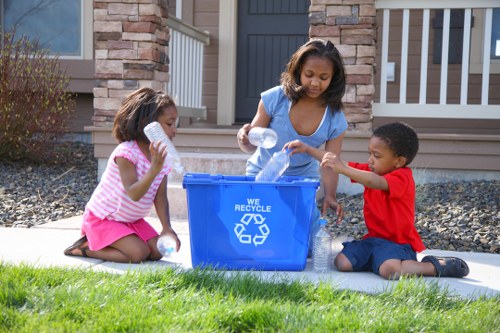
Making a sustainable rubbish area work on the ground requires both infrastructure and behaviour change. We promote clearly labelled waste zones for paper, cardboard, glass, plastics and food waste, aligned with the local boroughs approach to waste separation. Many local policies encourage source separation into dry recycling, organic bins and residual waste, and our operations are designed to support those borough-level schemes by maintaining clean, contamination-minimised streams.
 Partnerships are central to our model. We work directly with local charities and social enterprises to ensure that items suitable for reuse—furniture, electronics, textiles and undamaged surplus food—are diverted to community benefit. These collaborations reduce the environmental footprint of waste and create jobs and services for vulnerable residents. Donations and reuse pathways form an important layer on top of mechanical recycling, ensuring valuable materials are recovered before being processed.
Low-carbon collection and resource efficiency
Our fleet strategy focuses on low-carbon vans and operational efficiency. We deploy a mix of electric vans and Euro6-compliant low-emission vehicles on dense urban routes around Spitalfields market and the retail streets. Route optimisation software and load consolidation mean fewer journeys to local transfer stations, reducing CO2 emissions per tonne of waste collected. This low-carbon vans approach is part of meeting our broader carbon reduction commitments.To support proper recycling and a robust sustainable rubbish area, we offer targeted services tailored to the demands of local businesses: scheduled segregated collections, on-call bulky uplift for reuse partners, and designated glass and food-waste rounds. A short, practical list of waste streams we routinely separate and route to specialist facilities includes:
- Dry mixed recycling: paper, cardboard, plastic containers and cans
- Food and organic waste: collected separately for anaerobic digestion or composting
- Textiles and furniture: diverted to reuse charities and re-use centres
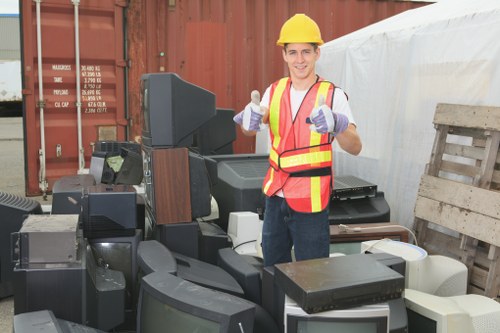
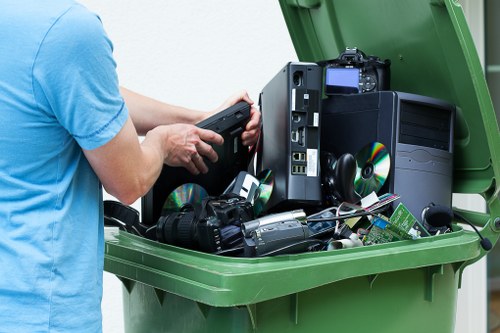
- Electronic waste: segregated for safe dismantling and recovery
Each stream is directed to appropriate local transfer stations or partner reprocessors designed to preserve material value and reduce contamination. That means cleaner bales from the MRFs and higher rates of successful recycling.
Governance and reporting are visible. We publish regular sustainability updates that show progress toward our 70% recycling target, detail tonnages diverted to reuse partners and report emissions reductions from fleet improvements. These performance snapshots help businesses in Spitalfields measure their own environmental footprint and take targeted actions—reducing single-use items, switching to returnable packaging or increasing on-site separation.
 Collaboration with community organisations reinforces the practical benefits of a sustainable rubbish area. Local charities receive usable donations through coordinated collection rounds, while social enterprises often refurbish or resell items that would otherwise be processed as waste. This not only maximises material life but also channels funds and opportunities back into the local economy—transforming waste into value.
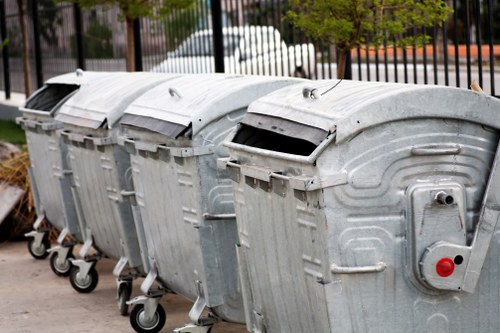
Practical next steps for tenants and businesses
For businesses considering how to align with our Spitalfields commercial waste model, the key steps are straightforward: segregate at source, label clearly, schedule appropriate pickups and engage reuse partners for bulky items. Small changes—like introducing separate food waste containers behind the bar or dedicated textile boxes in kitchens and stores—have outsized impact. When combined with consolidated collection and low-emission vehicles, these actions ensure the eco-friendly waste disposal area becomes the standard for commerce across the neighbourhood.In summary, Commercial Waste Spitalfields combines an ambitious recycling percentage target, practical partnerships with local transfer stations and charities, and a low-carbon collection fleet to create a resilient, sustainable rubbish area for the community. Our strategy is holistic: reducing waste at source, maximising reuse through charity and social enterprise partnerships, and ensuring that what does leave the site is transported and processed with minimal environmental impact.
Through cooperative effort between businesses, market operators, borough services and non-profit partners, the Spitalfields area can be an exemplar of urban commercial waste management that is both effective and equitable. The combined effect of reuse programmes, well-managed transfer station routes and an expanding fleet of low-emission vans makes a measurable difference in emissions, landfill diversion and community benefit.
We remain focused on continuous improvement—adapting to evolving borough approaches to waste separation, investing in cleaner vehicles, and deepening partnerships that keep materials circulating locally. That ongoing commitment keeps the eco-friendly waste disposal area and sustainable rubbish area at the centre of how commerce in Spitalfields serves people and the planet.
