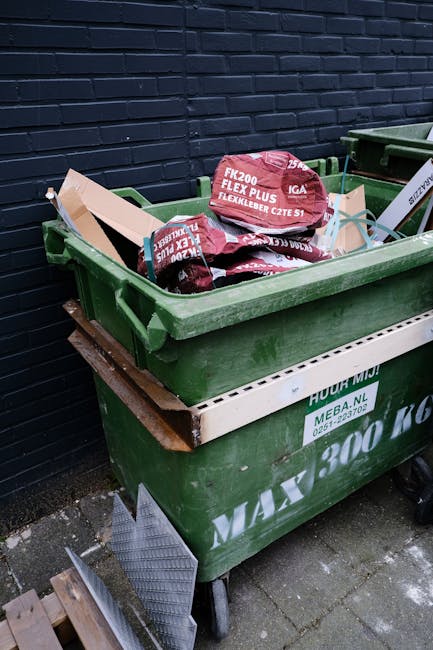
Spitalfields Market rubbish collection and skip alternative: a practical guide for traders, venues and busy sites
If you work around Spitalfields, you already know rubbish builds up fast. One delivery turns into broken packaging, a food stall closes and suddenly there are bags, cardboard, food waste, and awkward bulky items waiting to be moved before the next rush. That is where Spitalfields Market rubbish collection and skip alternative becomes genuinely useful. It is not just about getting rid of waste. It is about doing it quickly, keeping access clear, and avoiding the headache of a skip sitting where pedestrians, traders and deliveries need to flow.
In a place like Spitalfields Market, flexibility matters. A traditional skip can work in some situations, but often it is not the neatest or most practical option. Access may be tight, timing may be limited, and you may not want waste sitting out overnight. This guide breaks down how rubbish collection works, when a skip alternative makes more sense, and how to choose the right approach without overcomplicating things.
Why Spitalfields Market rubbish collection and skip alternative Matters
Spitalfields is busy, compact and always moving. That is exactly why waste management needs to be thought through properly. A skip can be convenient on a larger site, but in market surroundings it can also create problems: blocked access, awkward placement, complaints from neighbours, and wasted time shifting rubbish around a restricted space. For traders and local businesses, those frictions are more than an annoyance. They affect trading hours, presentation, and safety.
A skip alternative usually means a more responsive collection-based service. Waste is loaded, collected and removed rather than left on site. That simple difference matters a lot when you are dealing with tight courtyards, narrow side streets, shared access, or a business that cannot afford to have a skip taking up space for days. Truth be told, in places like this, being able to clear waste fast is often the difference between a smooth reset and a messy morning.
It also helps with first impressions. Customers notice what is sitting outside a premises. So do inspectors, landlords and delivery drivers. A tidy frontage makes life easier, and the waste disappears before it starts attracting attention. Not glamorous, sure, but very real.
Expert summary: For central London market settings, the best waste solution is often the one that clears waste quickly, keeps entrances open, and avoids leaving a container on the street longer than necessary.
How Spitalfields Market rubbish collection and skip alternative Works
In simple terms, the service is built around collection rather than storage. You gather the waste, separate what needs separating, and arrange a pickup or clearance. Depending on the type of waste, the team may remove it from inside a unit, from a loading area, or from a designated point that suits the site layout.
For many businesses, that means less handling overall. Instead of booking a skip, waiting for delivery, filling it, then waiting again for collection, the waste can be removed in one visit. That can be especially useful after refurbishments, stock clear-outs, seasonal changes, fit-outs or post-event cleanups. A market stall, cafe, restaurant, small office or storage space can all generate waste in bursts, not in neat, predictable piles. A skip alternative fits that reality better.
The usual flow looks something like this:
- You identify what needs removing.
- You separate any special items, such as electricals or hazardous materials.
- You arrange a collection slot that works around trading or opening hours.
- The waste is taken away efficiently, often with loading support.
- Recyclable materials are sorted where appropriate and the site is left clear.
That final point matters. A good waste collection service is not just about lifting bags. It should reduce clutter, keep the area usable, and make the next trading period easier. In a busy market environment, that is worth a lot.
Key Benefits and Practical Advantages
The main advantage is obvious: less hassle. But there is a bit more to it than that.
- Better use of space: You keep entrances, walkways and loading points free for people and deliveries.
- Faster turnaround: Waste is removed quickly instead of lingering on site.
- Cleaner presentation: Useful for customer-facing businesses that do not want a skip sitting outside.
- Less handling stress: If the team helps load, you save time and physical effort.
- More flexible timing: Collections can often be planned around quieter hours.
- Better for mixed waste: Useful where cardboard, packaging, furniture and general rubbish all appear together.
There is also a practical financial angle, though you should always compare properly rather than assume. If you only have a moderate amount of waste, or the waste appears in one-off bursts, a collection-based service can be more efficient than hiring a skip you may not fully use. On the other hand, if you are clearing heavy builder's rubble over several days, a skip might still be the better fit. It depends on the job, not the label.
For businesses that care about recycling and sustainability, this approach can also fit better with waste segregation. For example, cardboard, metal, furniture, appliances and general refuse can often be handled in ways that make sorting easier. If that is important to your operation, take a look at recycling and sustainability alongside the main waste service options.
Who This Is For and When It Makes Sense
This type of waste solution suits a wide range of people around Spitalfields, especially where access is tight or time is limited.
- Market traders dealing with daily packaging, damaged stock, or end-of-day rubbish.
- Cafes and food operators managing cardboard, sacks, broken fixtures and non-food waste.
- Retail units clearing seasonal displays, old packaging or back-room clutter.
- Offices that need files, furniture or general rubbish removed without disrupting the working day.
- Landlords and managing agents dealing with tenant leftovers or quick turnaround clearances.
- Contractors who need a tidy site after small refurbishments or snagging work.
It also makes sense when you are dealing with awkward items. A bulky sofa, a tired fridge, office chairs, or a stack of worn-out furniture can all be more sensibly removed by a collection service than dropped into a skip and left there. If you are clearing household-type items from a flat above a shop, you may find flat clearance or home clearance closer to what you actually need.
Sometimes people think, "It's only a few items, I'll just sort it later." And then later becomes two weeks later, with the back room starting to feel like a storage unit. We have all seen that happen. Better to clear it while it is still manageable.
Step-by-Step Guidance
If you are planning Spitalfields Market rubbish collection and skip alternative for the first time, keep it simple. A tidy process usually saves time and money.
- Identify the waste type. Separate general rubbish from furniture, appliances, confidential material, and anything hazardous.
- Estimate the volume. You do not need a perfect cube calculation. Just work out whether it is a few bags, a roomful, or a larger clearance.
- Check access. Note stairways, loading points, narrow entrances, parking limitations and time restrictions.
- Decide whether loading help is needed. Some collections are simple; others are easier with hands-on support.
- Book the right service. For business waste, office items or mixed commercial rubbish, a broader business waste removal service may be the better fit.
- Prepare the waste neatly. Put loose rubbish in bags, flatten cardboard where possible, and keep sharp or awkward items separate.
- Clear walkways before collection. This sounds obvious, but it saves time on the day.
- Confirm special items in advance. Fridges, mattresses, sofas, appliances and hazardous items often need specific handling.
If you are dealing with building debris from repairs or a small refit, the relevant route may be builders waste clearance rather than a general rubbish pickup. Matching the service to the waste is where the real value sits.
A small tip from experience: photograph the pile before collection if you are unsure about volume. It is not fancy, just useful. One picture often clears up a lot of back-and-forth.
Expert Tips for Better Results
Good waste clearance is partly logistics and partly judgement. The details matter more than people expect.
- Keep mixed waste under control: Cardboard, plastic wrap and general rubbish are easier to manage when they are grouped sensibly.
- Do not leave special items until the last minute: Appliances, mattresses and sofas can affect the booking if they are only mentioned late.
- Choose the quietest collection window: Early or mid-session pickups can avoid customer disruption.
- Use the right service for bulky items: Furniture, sofas and white goods are often better handled through specific disposal routes such as furniture clearance, mattress and sofa disposal or fridge and appliance removal.
- Ask about recycling separation: It can improve environmental performance and may make disposal more efficient.
Another practical point: if the rubbish is confidential, do not just throw it into mixed waste and hope for the best. Use a dedicated route such as confidential shredding for documents or sensitive paper records. That tiny bit of discipline saves trouble later.
And if you are working in a multi-user building, communicate early. A quick note to staff, neighbours or the site manager prevents the usual awkwardness. Nobody likes a surprise pile of waste by the loading bay at 8 a.m.
Common Mistakes to Avoid
Most waste problems are preventable. The same mistakes crop up again and again, usually because people are in a hurry.
- Choosing a skip when access is poor: A skip may look straightforward, but if it blocks the wrong place, it becomes a nuisance fast.
- Underestimating waste volume: This leads to delays, extra bookings, or half-finished clearances.
- Mixing hazardous items with general rubbish: That is a safety and compliance issue, not just a sorting issue.
- Forgetting appliance restrictions: Fridges and some electricals should not be treated like ordinary waste.
- Not checking site constraints: Tight stairs, low ceilings, loading windows and parking restrictions all matter.
- Leaving everything to one person: Then collection day arrives and no one knows where the pile is. A classic.
One more thing: do not assume every "clear out" is the same. A garage full of old stock is different from office furniture disposal, and both are different again from post-build rubble. Matching the service properly avoids wasted time and awkward surprises.
Tools, Resources and Recommendations
You do not need specialist equipment, but a few practical tools make the process easier.
- Heavy-duty rubbish bags: Helpful for loose mixed waste and smaller items.
- Cardboard flatteners or box cutters: Useful when the main issue is packaging volume.
- Labels or tape: Good for marking reusable items, recycling, or special waste.
- Simple measuring tape: Handy if you need to estimate bulky furniture or appliance sizes.
- Phone camera: Ideal for sending a quick visual estimate before booking.
On the service side, some readers will need more than general rubbish collection. For example, a back-office clear-out may sit neatly within office clearance, while a storage room or overflow area might suit garage clearance or even loft clearance if the waste has been building up over time.
If you want a fuller understanding of what can be loaded into a container, the guide on what can go in a skip is still useful, even if you end up choosing a skip alternative. It helps you understand the boundaries between general waste, restricted waste and special items.
For pricing questions, it is sensible to review pricing and quotes rather than trying to guess. Waste jobs can vary quite a bit depending on access, volume and item type, so a quick quote is usually the cleaner way forward.
Law, Compliance, Standards, or Best Practice
Waste collection in the UK sits within a framework of duty of care, safe handling and responsible disposal. You do not need to memorise legislation to do the right thing, but you do need to make sure waste is handled by a proper route and that the materials are not dumped carelessly or mixed in a way that creates risk.
For business premises around Spitalfields, that usually means being cautious with:
- general commercial waste
- food-related waste
- electrical items
- confidential paper
- potentially hazardous materials
Best practice is simple enough: identify the waste properly, separate what needs separating, and use a service that understands the item type. If there is any doubt, ask before collection. That is better than discovering an issue on the day, which always feels like a bad surprise in a cramped market yard.
Safety matters too. A clearance team should work with sensible manual handling, careful loading, and awareness of access risks. If you are comparing providers, it is worth looking at pages like health and safety policy and insurance and safety so you know the business takes those basics seriously. For companies with wider governance concerns, about us can also help you understand who you are dealing with.
Payments and booking should also feel straightforward. If you are arranging waste clearance for a business, it helps when the payment process is clear and secure. See payment and security for the kind of reassurance that saves unnecessary back-and-forth.
Options, Methods, or Comparison Table
Here is a simple comparison between a traditional skip and a collection-based skip alternative in a market or busy central London setting.
| Option | Best for | Advantages | Potential drawbacks |
|---|---|---|---|
| Traditional skip | Larger, predictable volumes of waste over several days | Good for ongoing loading; simple for certain construction jobs | Can take up space; may affect access; may not suit tight market sites |
| Collection-based rubbish removal | Mixed waste, bulky items, quick clearances, awkward access | Fast, flexible, less on-site clutter, usually easier for busy businesses | May require the waste to be ready at collection time; not ideal for long build-up jobs |
| Specialist item removal | Appliances, sofas, mattresses, confidential waste, hazardous items | Handled more appropriately; better sorting and safer disposal | May need separate booking or item-specific handling |
For many Spitalfields businesses, the collection-based option is the most natural fit. But, and this is important, the right choice depends on the waste itself. A small refurbishment might still favour a builders route, while a shop refit with bulky furniture could lean toward mixed waste removal plus a specific furniture disposal service. No single answer fits everything.
Case Study or Real-World Example
Imagine a small food retailer near the market after a display refresh. There are torn boxes, packaging fill, a damaged counter stool, one broken fridge shelf, and a few bags of general rubbish from the back room. Nothing dramatic. Just enough to make the space feel crowded and slightly chaotic, especially before opening.
A skip might work in theory, but it could sit awkwardly outside, interfere with foot traffic, and be overkill for the volume involved. A collection-based approach is cleaner. The team sorts cardboard from general waste, flags the damaged furniture, removes the awkward item separately, and clears the lot in one go. By late morning, the back area is breathing again.
That is the real value. Not just disposal, but a reset. The business gets its space back, staff can move properly, and there is no lingering pile to look at until the end of the week. Small thing? Maybe. But if you work in a busy area, small things shape the whole day.
Practical Checklist
Use this quick checklist before booking your rubbish collection or skip alternative service.
- Identify all waste types clearly.
- Separate general rubbish from special items.
- Check whether anything is hazardous, confidential, bulky or electrical.
- Estimate the amount of waste as accurately as you can.
- Confirm access, loading points and timing constraints.
- Decide whether you need help loading items.
- Use the relevant service for the job, not just the nearest-sounding one.
- Review pricing and booking details in advance.
- Keep walkways and exits clear before collection.
- Make sure the site is left tidy after removal.
If the waste is mainly household-style clutter rather than purely commercial rubbish, services like house clearance or furniture disposal may be more fitting. The good news is that there is usually a cleaner route than people first expect.
Get a free quote today and see how much you can save.
Conclusion
Spitalfields Market rubbish collection and skip alternative is really about choosing the smarter, less disruptive way to manage waste in a busy place. When access is tight, timing matters, and you need the area to stay presentable, collection-based clearance often beats leaving a skip on site. It can be quicker, tidier and far easier to live with.
The best results come from matching the service to the waste, preparing properly, and keeping the process simple. That is usually the whole game, to be fair. Not flashy. Just practical, reliable and done without fuss.
If you approach it that way, waste stops being a constant nuisance and becomes one more part of the day that is handled properly. And that makes the whole space feel calmer, which is no small thing in a place as lively as Spitalfields.
Frequently Asked Questions
What is the best skip alternative for Spitalfields Market rubbish collection?
The best option is usually a collection-based waste removal service that fits your access, timing and waste type. In tight market settings, it often works better than leaving a skip on site.
Is rubbish collection cheaper than hiring a skip?
It can be, especially for smaller or mixed loads. But pricing depends on the amount of waste, item type and access. A proper quote is the safest way to compare.
Can I use this service for bulky items like sofas or mattresses?
Yes, but those items are often best handled through specialist routes such as mattress and sofa disposal or furniture clearance, depending on what needs removing.
What if I have office waste near Spitalfields Market?
Office waste is often best dealt with through office clearance or business waste removal, particularly if you are clearing desks, chairs, files or mixed back-office items.
Do I need a skip if I only have a small amount of rubbish?
Not usually. For a few bags, small bulky items or one-off clearances, a collection service is often more sensible and less disruptive.
Can builders' waste be removed without a skip?
Yes. Builders waste clearance is a common skip alternative when you have rubble, packaging, offcuts or refit debris but do not want a container sitting outside.
How should I prepare waste before collection?
Keep rubbish bagged where possible, flatten cardboard, separate special items, and make sure the collection point is easy to reach. That makes the job much smoother.
What happens to recyclable waste?
Where possible, recyclable materials are separated and directed into appropriate recycling streams. The exact handling depends on the waste type and service chosen.
Can confidential paperwork be mixed with general rubbish?
No, that is not best practice. Confidential documents should go through confidential shredding so sensitive information is handled properly.
What if I am not sure whether an item counts as hazardous waste?
If you are unsure, do not guess. Ask before booking. Hazardous waste disposal needs the right handling, and it is better to clarify early than create a problem later.
How do I choose between flat clearance and home clearance?
If the waste comes from a flat above a business or in a compact residential unit, flat clearance is often the better fit. Home clearance suits broader household clear-outs.
How soon can rubbish be collected around Spitalfields?
That depends on availability and the type of waste, but collection-based services are generally chosen for speed and flexibility. Early planning usually gives you the smoothest slot.